eBay sneaker fees for sellers in the US, the UK and Germany
On eBay, sneakers have their own fee rule for business sellers. The rule changes at one price: $150 in the US, £100 in the UK and EUR 100 in Germany. From that price the fee is lower. Spain and France have no sneaker rule. All numbers are for a business seller without an eBay Store, checked Oct 2026.
 The RestocksAIO teamOperators, not flippers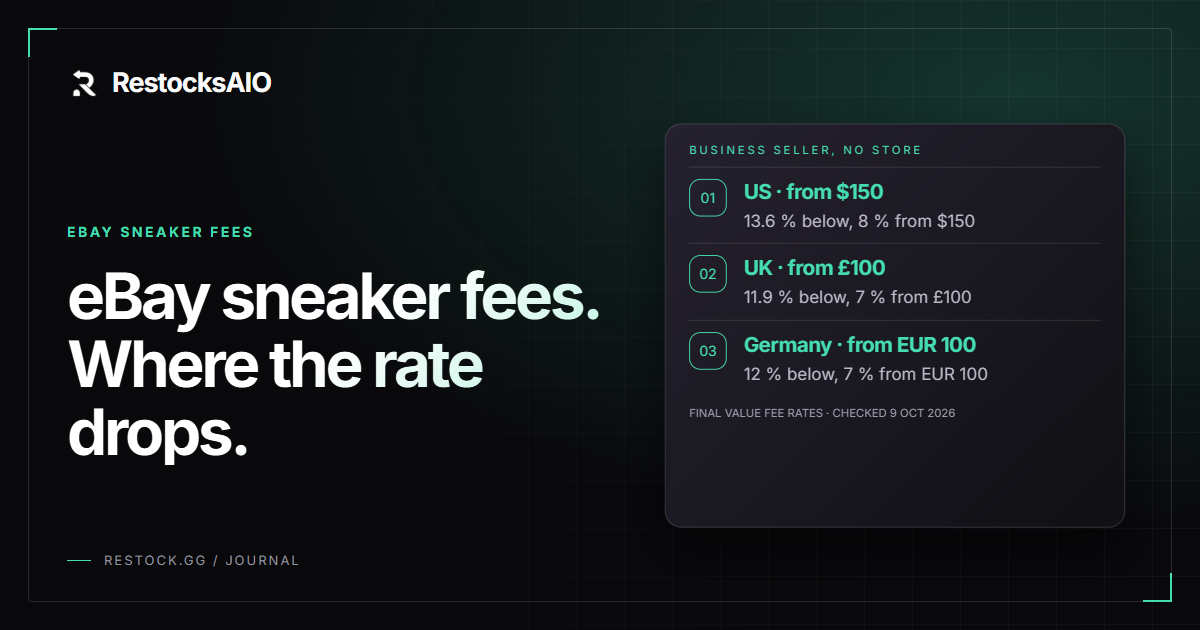
eBay sneaker fees in the United States
For athletic shoes, eBay charges a business seller 13.6% when the total amount of the sale is under $150. From $150 the fee is 8%, and eBay charges no per-order fee. The total amount of the sale includes the postage the buyer pays. Under the threshold, the per-order fee is $0.30 for an order up to $10 and $0.40 above.
Two examples with free postage show the step. Example at $140: the fee is $19.04 plus $0.40, so $120.56 is left before your own shipping cost. Example at $160: the fee is $12.80, so $147.20 is left. The price is $20 higher, and $26.64 more is left.
A seller with an eBay Store has other rates. This article does not cover Store rates, promoted listings or international fees.
eBay trainers fees in the United Kingdom
eBay UK calls them trainers. A business seller pays 11.9% when the item price is under £100, and 7% from £100. In the UK the threshold uses the item price without postage. That is different from the US rule.
Two more fees apply. The per-order fee is £0.30 for an order up to £10 and £0.40 above. The regulatory operating fee is 0.35% of the total amount of the sale. Example at £120 with free postage: £8.40 plus £0.40 plus £0.42, so £110.78 is left.
Private sellers have another rule. UK-based private sellers sell without a selling fee, as eBay UK states.
eBay sneaker fees in Germany
On eBay Germany (search term: eBay Sneaker Gebühren), a business seller pays 12% on sneakers under EUR 100. From EUR 100 the fee has two steps: 7% of the price up to EUR 990, and 3% of the part above. The per-order fee is EUR 0.35, or EUR 0.45 for an order above EUR 10.
Example at EUR 200 with free postage: EUR 14.00 plus EUR 0.45, so EUR 185.55 is left. The German fee page lists no regulatory operating fee.
Private sellers within Germany sell without a selling fee, as eBay Germany states.
eBay fees in Spain, France and Italy
Spain and France have no sneaker rule on their fee pages. In Spain a business seller pays 9% up to EUR 990 and 2% above. The per-order fee is EUR 0.35, or EUR 0.45 above EUR 10. The regulatory fee is 0.35%. In France, clothing and accessories pay 12%, plus EUR 0.35 for each order and a regulatory fee of 0.35%. Private sellers with an EEA address sell on ebay.fr without a selling fee, as eBay France states.
Italy has a rule for shoes: 11% up to EUR 100 and 5% for the part above. Add EUR 0.35 for each order and a regulatory fee of 0.35%. Example at EUR 200 with free postage: EUR 16.00 plus EUR 0.35 plus EUR 0.70, so EUR 182.95 is left.
The fee threshold is not the Authenticity Guarantee threshold
These are two prices, and sellers mix them. The fee rule changes at $150 in the US. The eBay Authenticity Guarantee is another rule, with its own prices and its own list of eligible items. A pair can be under the fee threshold and still go through authentication.
In the UK and Germany, eBay states that authentication is automatic for eligible sneakers from 200 in the local currency. For the US, eBay's own pages give different values, so this article states none. Read the eBay Authenticity Guarantee page for your country before you set a price near a threshold. eBay decides which listings qualify.
eBay or StockX: compare the payout, not the fee
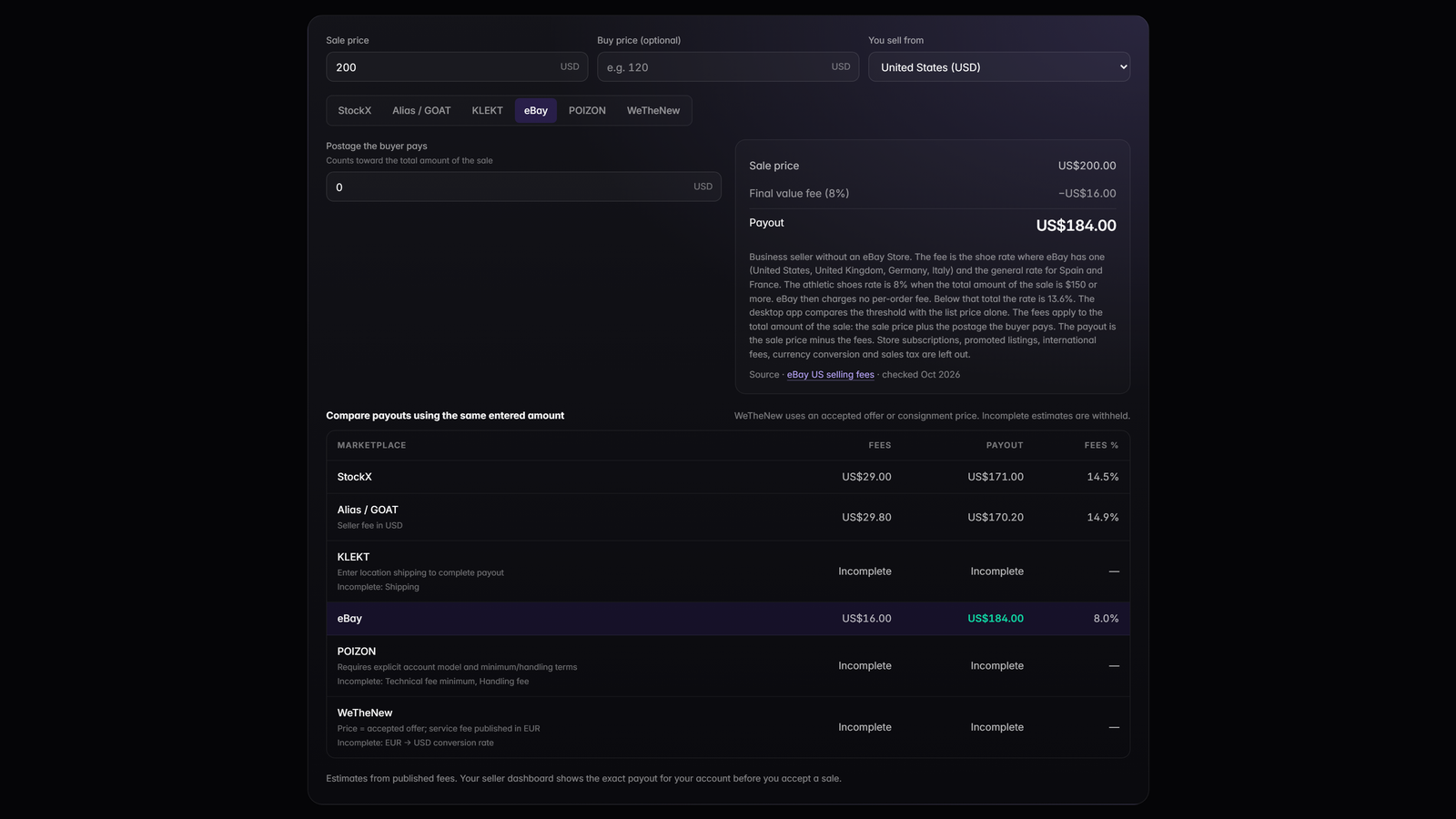
A lower fee does not mean a higher payout. The sale price differs between marketplaces, and so do the shipping cost and the seller level. Put the same pair into the eBay sneaker fees calculator. It shows eBay beside StockX for one sale price and one seller location.
The work is different too. On eBay you hold the pair, set the price and ship it under your own policies. On StockX you list an ask, and after the sale you ship the pair to StockX. The article where to sell sneakers compares the marketplaces by the kind of stock you hold.
Related reading
All articles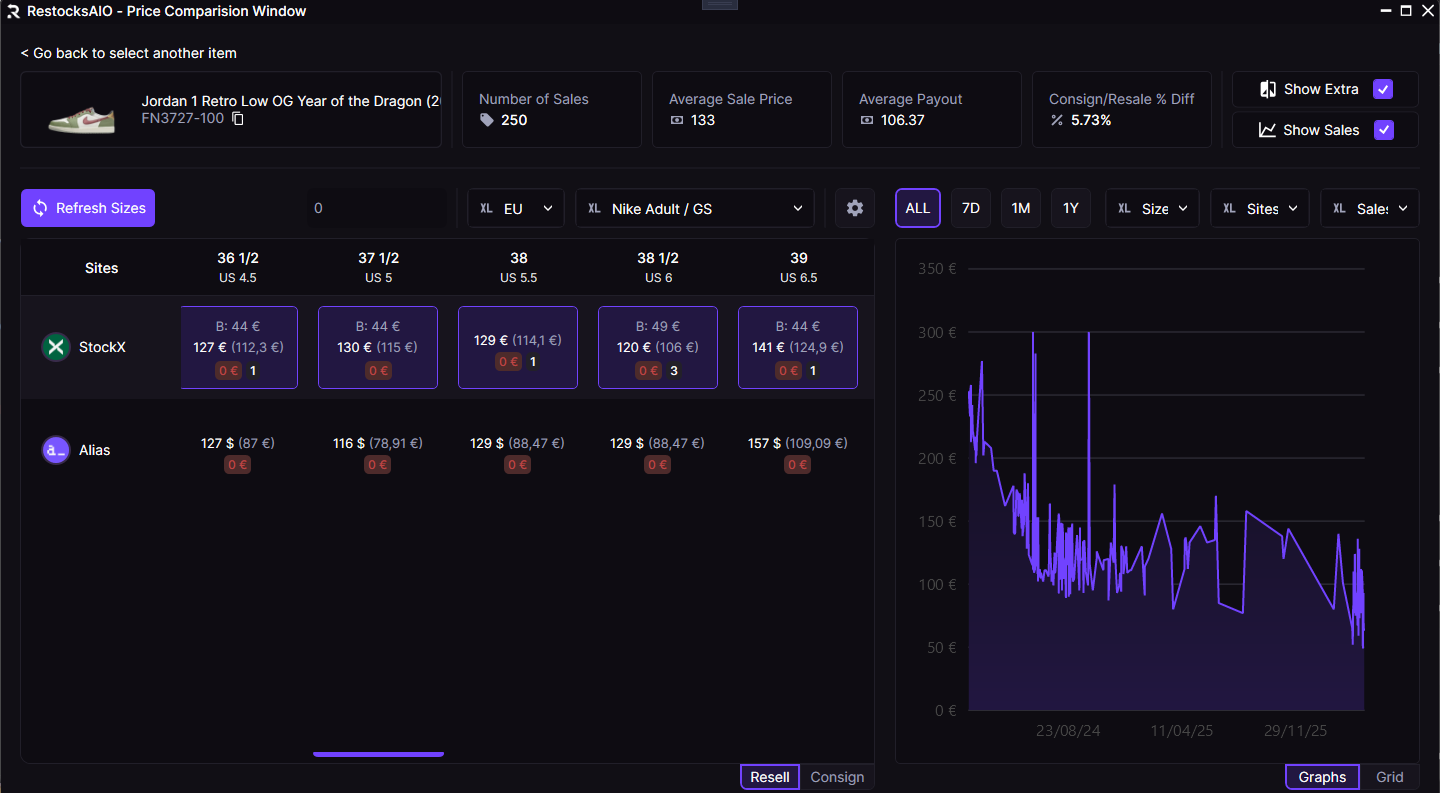
Where to sell sneakers in 2026: StockX vs Alias vs WeTheNew vs POIZON
Each authenticated marketplace reaches a different buyer and pays out differently. Here is how to decide where a given pair should be listed in 2026.
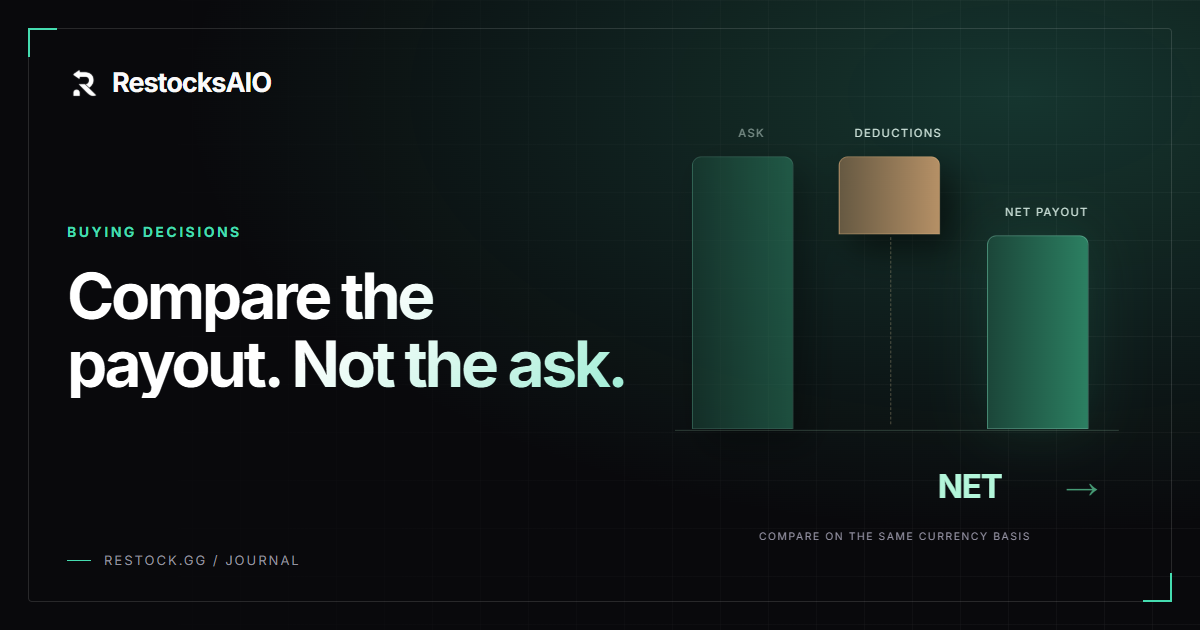
How to compare net payouts across marketplaces before you buy
Whether to buy depends on the payout. Here's how to check what a pair will net you on every marketplace you sell on, before you pay for it.

Selling on GOAT with Alias in 2026: fees, seller score and cash out
How the GOAT seller app reaches GOAT, Flight Club and Sneakers.com buyers. How commission and location fees combine, why seller score changes the rate, and what cash out costs.